16/03/2026
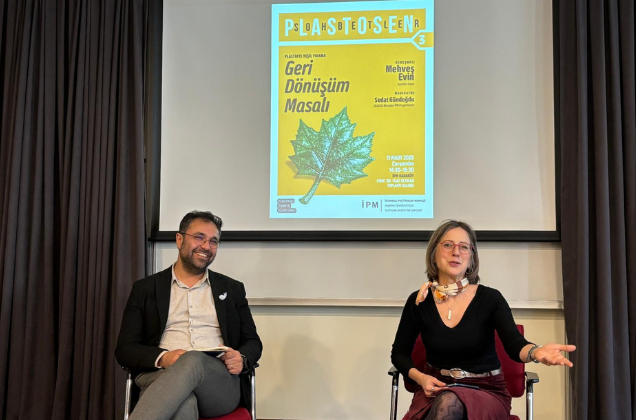
The third meeting of the “Plastocene Talks” seminar series, organized by the Istanbul Policy Center (IPC) – Sabancı University – Stiftung Mercator Initiative, under the leadership of 2025/26 Mercator-IPC Researcher Sedat Gündoğdu, and in collaboration with the Plastic-Free Türkiye Platform, was held on March 11th at the IPC Karaköy.
The event, titled “Green Washing in Plastics: The Recycling Fairy Tale,” featured journalist and author Mehveş Evin as a speaker, while Sedat Gündoğdu moderated the session. The event explored how the concept of recycling is addressed in the process from plastic production to use and waste management, and evaluated the environmental impacts of the plastic age from various perspectives.
The discussion covered current developments in plastic consumption and waste management, and also addressed the new draft regulations concerning single-use plastics in Türkiye. The potential impact of these regulations on reducing plastic use and their reflections on daily plastic consumption habits were evaluated.
Later in the event, it was emphasized that recycling should be considered not only at the waste stage, but also from the production and design processes onwards. Speakers stated that considering the recyclability of products from the design stage is important for the effectiveness of recycling systems.
The session also touched upon practices in different countries. Examples of how recycling systems work in countries such as Norway, Sweden, and the United Kingdom were shared, and it was stated that the correct separation of waste at the source plays a decisive role in the success of these systems. It was emphasized that establishing the necessary infrastructure and systems for the effective functioning of separation processes can increase the success rate of recycling practices.
Participants stated that recycling alone is not a sufficient solution; it should be supported by broader and systemic approaches encompassing production, consumption, and waste management. In this context, the importance of developing alternatives and sustainable production models to reduce plastic use was also discussed.
The Plastocene Talks series, launched in January 2026, aims to create a discussion environment covering a broad perspective ranging from the history of plastic to its current environmental and social impacts. The series will continue in the coming period with events addressing different topics related to plastic production, consumption, and waste management.